The month
What the month looks like
Here’s what July 2026 actually held. The 2027 calendar follows the same rhythm, and host families get the full day-by-day schedule in the spring.
Week one
- Family & fun: Arrival & welcome receptionHost teens greet their match off the bus
- Discovery & team-building: Discovery Day + pool party
- Day trip: Canoeing the BrandywineThen a progressive dinner, house to house
- Family & fun: Concert in Bellevue State ParkA family picnic on the lawn
- Day trip: Wilmington RiverfrontBoat ride, mini-golf, scavenger hunt
- Day trip: Philadelphia + a Phillies gameLiberty Bell, Reading Terminal, the Rocky steps
- Service: Service at Friendship HouseSorting clothing for neighbors in need
- Day trip: Beach dayCape Henlopen and the Rehoboth boardwalk
Week two
- Family & fun: Three Family DaysNo program — time with your teen
- Day trip: Washington, D.C.Monuments, Arlington, the Holocaust Museum
- Discovery & team-building: Listening circles & Arts for Peace
- Service: Service at UrbanPromiseHelping run a summer camp for kids
- Discovery & team-building: Discovery Day at Guppy GulchInflatables, paddleboards, team challenges
- Faith & understanding: Houses of worshipA mosque, a synagogue, a Quaker meeting
- Day trip: Lancaster CountyBuggy ride and dinner with an Amish family
Week three
- Family & fun: Car wash fundraiser
- Day trip: Hershey Park
- Day trip: Long Beach Island beach day
- Discovery & team-building: RetreatsOvernight for the Northern Irish teens; a day retreat for Delaware teens
- Service: Service at Friendship House & Bright Spot Farm
- Family & fun: UPD 5K + family picnicOur biggest fundraiser of the year
Week four
- Family & fun: Anniversary celebration2026 marked our 50th year
- Discovery & team-building: Community leadership trainingWith former UPD participants
- Service: Service at the Mary Campbell Center
- Day trip: New York CityCentral Park, the 9/11 Memorial, a sunset ferry
- Faith & understanding: Jewish Community CenterA Holocaust survivor’s story, then pickleball
- Family & fun: Northern Ireland NightThe visiting teens put on a show
- Day trip: Lums Pond State Park
- Family & fun: Farewell dinner & dance
- Discovery & team-building: Final Discovery Day & departure
Weekdays are run by the group leaders, and carpools are shared — most host parents keep working through the month. Family events (the concert, the 5K picnic, the farewell dinner) are the ones you’ll want on your own calendar.
The curriculum
Three strands run through all four weeks
The calendar looks like a busy summer of beach days and ballgames — and it is. But underneath the trips, the month is built around three things the program has been teaching since 1976. Nothing about it feels like school. That’s deliberate.
Peace
Teens who grew up on opposite sides of a divide spend a month unable to avoid each other. The program gives that proximity structure — facilitated sessions, shared worship, and retreats where the group says out loud what changed.
- Discovery Days — facilitated sessions on identity, prejudice, and reconciliation
- Houses of Worship day — Catholic Mass, Protestant service, synagogue, mosque, Quaker meetinghouse
- Ecumenical services hosted by Delaware congregations
- Separate Northern Irish and American retreats, then the group reconvened
Service
Working side by side on something neither teen owns turns out to be the fastest route to trust. Service days are scheduled across the month, not tacked on, and the teens raise money for the program that brought them together.
- Service days with Wilmington-area organizations
- The annual UPD 5K Run/Walk — teens take part alongside the community
- Car wash and other teen-run fundraising
- Documented hours for every participant
Leadership
Every Delaware teen is responsible for a person, not just a schedule. They host, they navigate, they speak in front of the group, and they go home having been the one somebody else depended on for a month.
- Each Delaware teen is the matched partner and guide for one visitor
- Four group leaders model the work daily — two Northern Irish, two Delaware
- Teen-led evening events and closing ceremony roles
- Alumni return as group leaders and board members
Why it’s built this way
Peace, service, and leadership aren’t three separate units on a syllabus — they happen in the same van on the way to the same service site. A teen learns to trust someone by working next to them, and learns to lead by being the person that someone is counting on. Four weeks is long enough for all three to stop being ideas.
The month at a glance
What four weeks actually asks of you
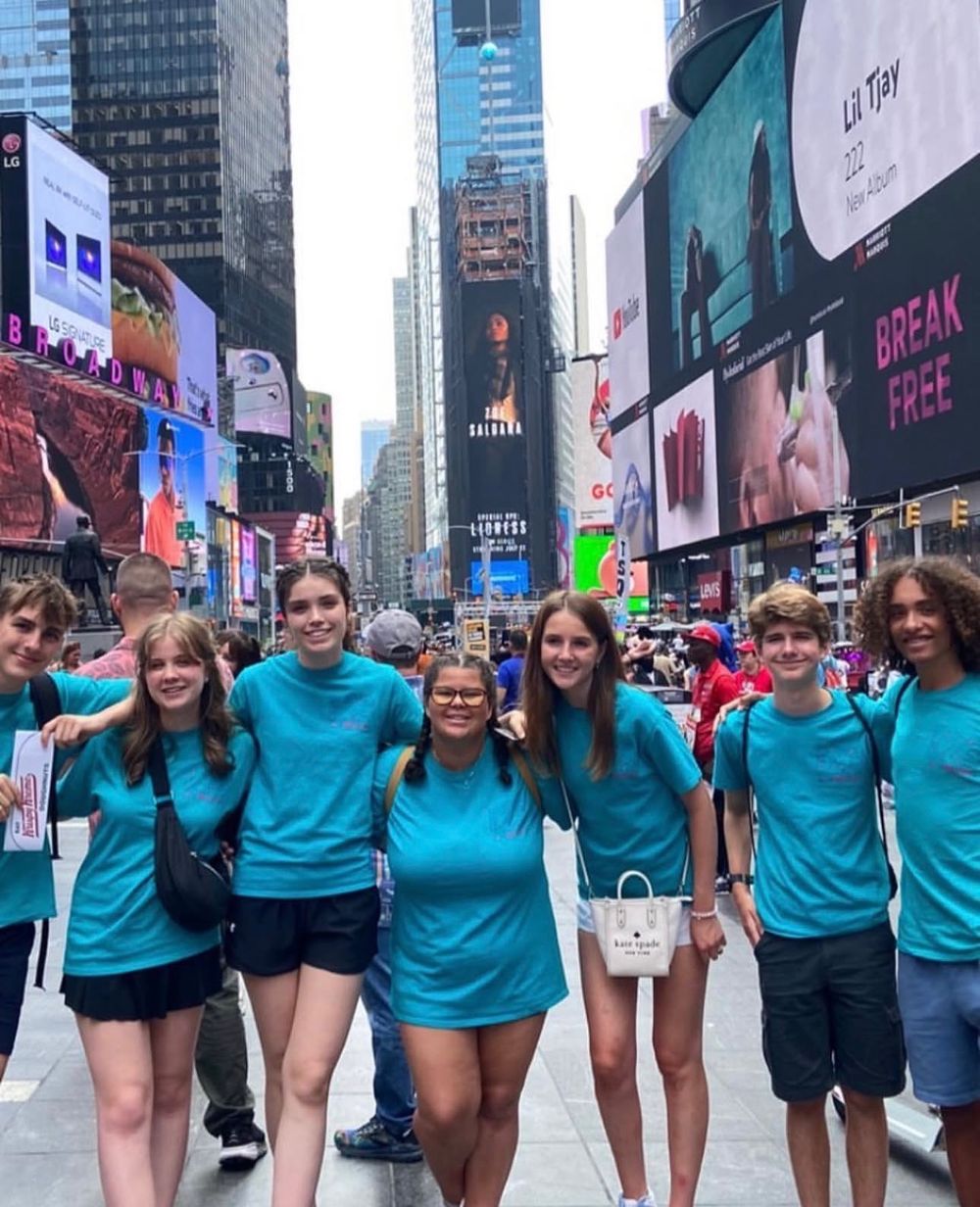
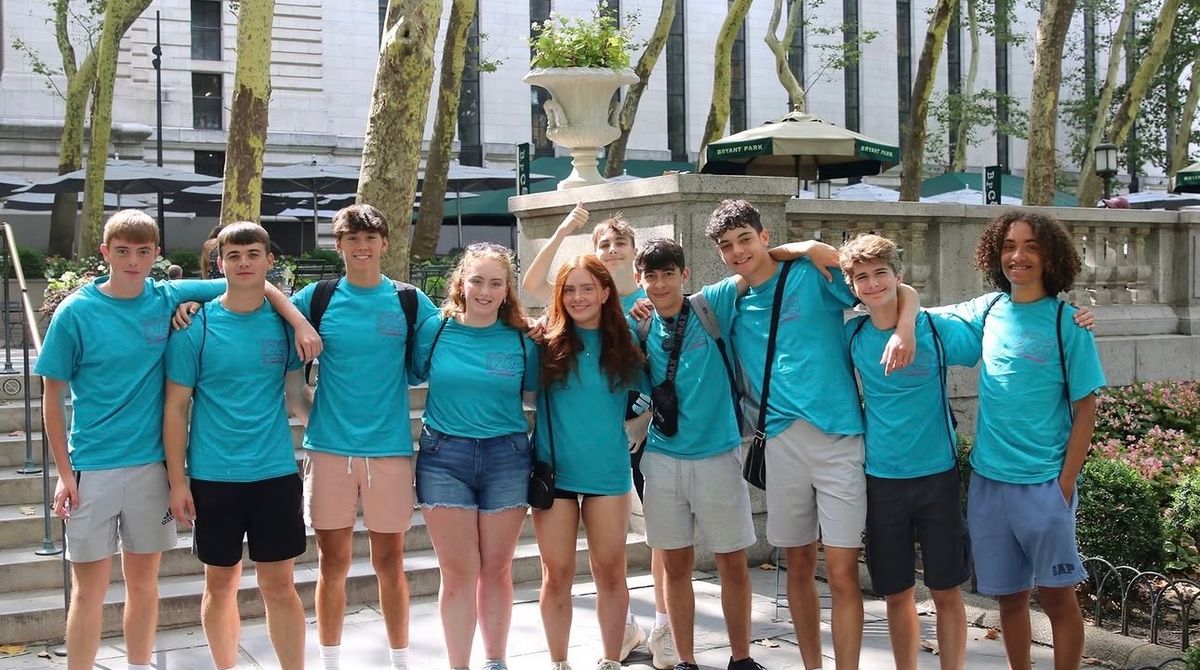
The day-by-day calendar goes to host families in the spring, once dates and venues are set. Here’s the shape of it — enough to judge the commitment before you say yes.
The big three
The trips the teens talk about for years
Three full-day trips anchor the month. They are long days, they are on the bus by dawn, and they are the ones that come up at every reunion.
Washington, D.C.
The monuments, the museums, and the memorials — for teenagers from a country working through its own contested history, standing in front of American monuments to conflict and civil rights lands differently than it does for a tourist.
New York City
The longest day on the calendar and the one most Northern Irish teens have been picturing since they were accepted. Out before sunrise, back near midnight, and worth every hour of it.
Hershey Park
A whole day of roller coasters with no agenda attached — and, not by accident, one of the places where the group stops being two groups. Fourteen hours of queuing together does more than a facilitated session sometimes.
Who comes
The teens who arrive in July have already been through a long selection.
Nobody is put on a plane casually. Each partner town in Northern Ireland runs its own selection, and only a fraction of the teenagers who apply are chosen.
In Northern Ireland
They apply, and most aren't chosen
Teens apply through the Ulster Project committee in their own town. The committee reviews written applications, interviews the teen and their parents, and takes references before anyone is offered a place.
The balance
Balanced by design
The group is deliberately built: equal numbers from each of Northern Ireland’s two main communities, an even split of boys and girls, all aged 14 to 16. Every teen is welcome regardless of how closely they identify with any tradition — what matters is that the group as a whole reflects both sides of the divide. The composition is the point of the program, not an outcome of who applied.
Before they fly
Prepared, and never unaccompanied
Selected teens meet as a group at home before travel, and two adult leaders from their own town travel with them and stay for the month. Your family is never the only adult supervision.
In Coleraine, the town that sent us teens in 2026, one in five applicants was offered a place. The teenagers who make it to Delaware are the ones who convinced a committee at home that they were ready to spend a month with the other side — and their families agreed to it too.
Three towns, one river
Ulster Project Delaware pairs with a different town in Northern Ireland from year to year. All three sit on the River Bann — the same water runs past every one of them, from the Mourne foothills to the north coast.
-
Coleraine
County Londonderry · Lower Bann
The northernmost of the three, a few miles inland from the Causeway coast, where the Bann finally reaches the sea. A past partner town — one in five teens who applied was accepted.
-
Portadown
County Armagh · Upper Bann
A market and mill town on the river just south of Lough Neagh, in the middle of the orchard country of north Armagh.
-
Banbridge
County Down · Upper Bann
The smallest of the three, upstream of Portadown on the road between Belfast and Newry, with the Mourne Mountains rising to the south.
The River Bann, drawn in blue, rises in the Mournes, runs north through Banbridge and Portadown into Lough Neagh, and leaves the lough for the sea past Coleraine.
Our 2027 partner town is Portadown
This July we're paired with Portadown, County Armagh — a market and mill town on the River Bann, in the orchard country of north Armagh. The program, the dates, and what's asked of your family are the same as every year.